Generative Engine Optimization Agency: What It Does
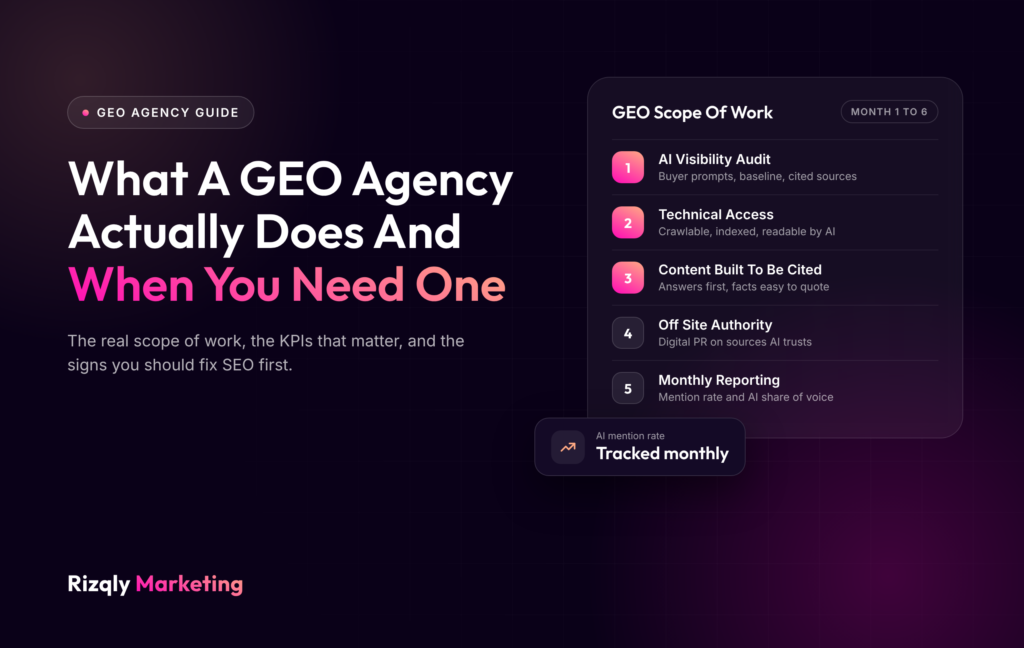
A generative engine optimization agency gets your brand mentioned and cited in AI answers from ChatGPT, Perplexity, Gemini and Google’s AI Overviews. In practice, the work is five things: auditing how AI tools describe you today, making sure AI systems can crawl and understand your site, rewriting key pages so they are easy to quote, earning mentions on the third party sites AI tools trust, and reporting how often you appear across a fixed set of buyer prompts. You need a generative engine optimization agency when buyers in your category are already asking AI tools for recommendations and your SEO basics are in place. If your site barely ranks on Google, fix that first.
If GEO is new to you, start with our explainer on what generative engine optimization is. This guide is for the next question: what would you actually be paying for?
What A Generative Engine Optimization Agency Does
The label is new, but most of the work builds on SEO. Google’s own May 2026 guide on optimizing for generative AI features says its AI features rely on the same core ranking and quality systems as Search, and that unique, useful content matters more than any special trick. A good generative engine optimization agency starts there and adds the parts that are specific to AI answers.
1. AI Visibility Audit And Prompt Research
Before changing anything, the agency builds a list of 30 to 100 prompts your buyers actually ask (“best payroll software for a 50 person company”, “is X worth it”), runs them across the main AI platforms, and records whether you are mentioned, cited, described correctly, and which competitors and sources show up instead. The sources are the useful part: they show which review sites, forums and publications AI tools lean on in your category.
2. Technical Access For AI Systems
AI systems can only use pages they can reach. The agency checks robots.txt rules for AI crawlers, CDN or firewall settings that block bots, whether key content is rendered in HTML rather than hidden behind scripts, and whether pages are indexed in Google and Bing, since several AI tools draw on search indexes.
llms.txt And Schema: Useful, Not Magic
Expect an agency to discuss llms.txt and schema markup for AI search. Both can help AI systems read your site, but Google’s guide is clear that its AI features need no special markup. Treat them as hygiene, not the strategy. A generative engine optimization agency that sells either as the main deliverable is selling the easy part.
3. Content Built To Be Cited
This is usually the biggest piece of work. The agency rewrites your most important pages so the answer comes first, claims are specific, and facts are easy to lift: comparison tables, clear definitions, pricing explanations, original data. The Princeton led research paper that named GEO found that adding citations, quotations and statistics could raise a source’s visibility in AI answers by up to 40% in their tests (Aggarwal et al., KDD 2024), with results varying by topic. The platform playbooks differ a little, so a good agency will tailor pages for ranking on ChatGPT and for getting cited in Google AI Overviews.
4. Off Site Authority And Digital PR
AI tools describe brands using what others say about them. The audit usually shows the same handful of review sites, comparison articles, Reddit threads and industry publications cited again and again. The agency works to get you accurately listed, reviewed and mentioned there through digital PR, partnerships and outreach. This is slower than on site work, and it is where most of the lasting gains come from.
5. Measurement And Reporting
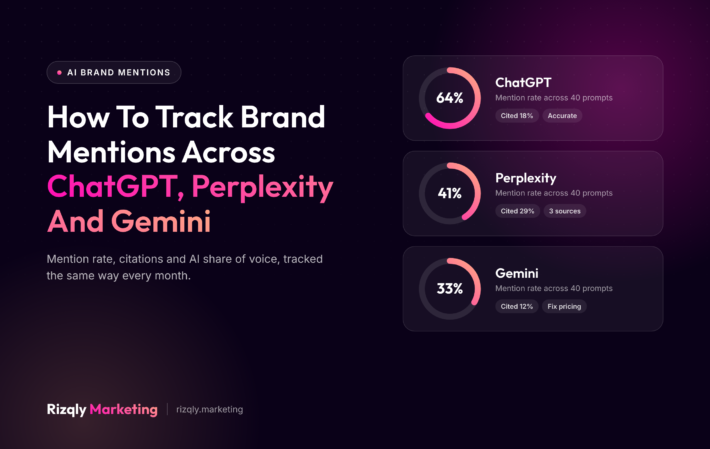
Every month the agency reruns the prompt set and reports mention rate, citation rate and share of voice against competitors, plus AI referral traffic and conversions in GA4. Our guide on how to track brand mentions in AI walks through the method, and our comparison of AI visibility tracking tools covers the software agencies use.
GEO Agency Vs SEO Agency Vs AI SEO Services
The names overlap, and agencies use them loosely. Here is how the work usually differs. For the deeper comparison, see GEO vs SEO.
| SEO agency | GEO agency | AI SEO services | |
| Main goal | Rank and get clicks from search results | Get mentioned and cited in AI answers | Varies: often SEO done with AI tools, sometimes GEO |
| Core metric | Rankings, organic traffic, conversions | Mention rate, citation rate, AI share of voice | Ask; the name alone doesn’t tell you |
| Content focus | Pages that match search intent | Pages that are easy to quote and verify | Often faster content production |
| Off site work | Link building | Mentions on sources AI tools cite | Varies |
| Best for | Most businesses first | Brands with SEO basics in place and buyers using AI | Read the scope before buying |
“AI SEO services” is the label to read most carefully. Some providers mean GEO; others mean ordinary SEO produced with AI writing tools. Ask which one you are getting. If what you need is citations in AI answers, you want a generative engine optimization agency, whatever the label on the proposal says.
What A GEO Scope Of Work Should Include
Deliverables By Month
A typical first engagement looks like this. Use it to check any generative engine optimization agency proposal, including ours.
| Phase | Deliverables | What you should receive |
| Month 1 | Prompt research, AI visibility baseline, technical access audit, source map of cited sites | A baseline report and a prioritized fix list |
| Months 2 to 3 | Rewrite priority pages, fix technical blockers, correct inaccurate brand information, start outreach to cited sources | Content briefs, updated pages, outreach list |
| Months 4 to 6 | New comparison and data led content, digital PR, review and listing work, monthly prompt reruns | Monthly report against the baseline |
| Ongoing | Prompt set updates, new platforms, content refreshes | Quarterly review of what moved and why |
KPIs That Actually Mean Something
Good GEO reporting tracks mention rate (the share of prompts where you appear), citation rate (how often your site is linked as a source), share of voice against named competitors, accuracy of what AI says about you, and AI referral visits and conversions in GA4. The last one is the one your finance team will care about.
Why “AI Rank” Is The Wrong Metric
AI answers change almost every time you ask. A SparkToro and Gumshoe study found the odds of getting the same list of brands twice were under 1 in 100. Any report that shows your “position #2 in ChatGPT” from one screenshot is measuring luck. Ask for percentages across repeated runs instead.
When You Need A GEO Agency
Signs You Are Ready
• Your buyers research with AI tools: sales calls mention ChatGPT, or AI referrals show up in GA4.
• Competitors are named in AI answers for your category and you are not, or AI describes you wrong.
• Your SEO basics are solid: pages are indexed, the site is crawlable, and you rank for some core terms.
• You can act on recommendations: someone can approve content changes and support PR.
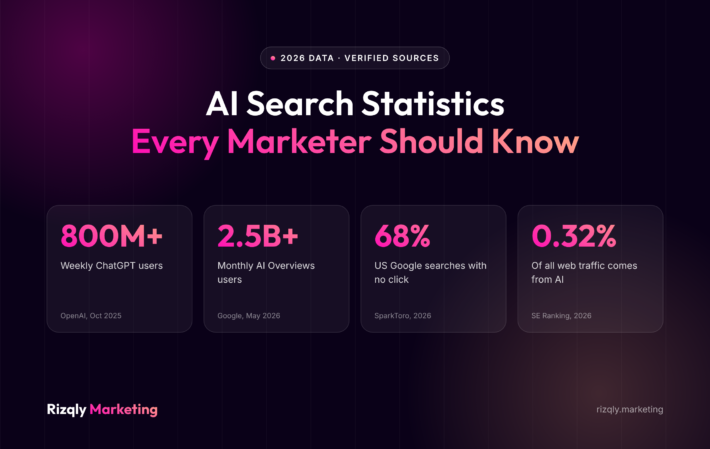
For context on how fast AI search use is growing, our roundup of AI search statistics pulls the latest numbers together.
When To Wait And Fix SEO First
If your site has indexing problems, thin pages, or no rankings at all, a generative engine optimization agency retainer will mostly pay for SEO under a different name. The same is true for local businesses whose customers still search “near me” on Google Maps. In those cases, put the budget into SEO services that fix the foundations first, then add GEO once Google can find and trust your site.
How GEO Services Are Priced
There are no standard rates yet, so compare models rather than headline numbers. A generative engine optimization agency will usually offer a one off audit (a fixed fee for the baseline and fix list), a monthly retainer (ongoing content, PR and reporting), or a hybrid where the audit fee is credited against the first months of a retainer. Price usually depends on the number of prompts tracked, platforms covered, pages rewritten each month, and how much digital PR is included. Ask for the deliverables per month in writing; a retainer without them is hard to judge.
How To Hire A GEO Agency
Eight Questions To Ask Before You Sign
1. Which prompts will you track, and can we add our own?
2. Which platforms do you measure, and how many runs per prompt?
3. What will you change in month one, and what will we receive?
4. How do you decide which third party sources to target?
5. Who writes the content, and who checks facts?
6. How do you report AI referral traffic and conversions?
7. Can you show a before and after for a client, with the measurement method?
8. What do you need from us each month to make this work?
Red Flags
• Guaranteed placement in ChatGPT or AI Overviews. No one controls these answers.
• Reports built on single screenshots or an “AI rank”.
• A scope that is mostly llms.txt, schema or AI written blog posts.
• No access to your own prompt data or reports if you leave.
A Worked Example: A B2B Software Company
A hypothetical, with illustrative details. Say a payroll software company ranks well on Google but sales hear that prospects “asked ChatGPT for options” and never saw them. The audit finds the brand missing from 70% of 40 buyer prompts, an outdated pricing description in AI answers, and three comparison sites cited in almost every answer, none of which list the product.
A sensible first quarter: update the pricing and comparison pages so the facts are current and easy to quote, get the product listed and reviewed on the three cited sites, and publish one original data piece on payroll costs. Then rerun the 40 prompts monthly. Results depend on competition and how quickly those sites update, so the honest expectation is gradual movement over several months, not a jump in week two.
How Rizqly Runs GEO
At Rizqly, GEO sits alongside SEO, paid media and web work, so recommendations don’t stop at a report. If you want a team to run the audit, content and reporting described above, you can see the GEO and AI search optimization services Rizqly offers and get in touch.
Frequently Asked Questions
Q1: What Is The Difference Between A GEO Agency And An SEO Agency?
An SEO agency works to rank your pages and earn clicks from search results. A generative engine optimization agency works to get your brand mentioned and cited in AI answers. Much of the groundwork overlaps, and many agencies do both.
Q2: How Long Does GEO Take To Show Results?
Fixes to your own pages can show up within weeks on platforms that search the web live. Gains that depend on third party mentions usually take three to six months.
Q3: Can A GEO Agency Guarantee ChatGPT Mentions?
No. AI answers vary from run to run and no one controls them. Ask for measured improvement in mention rate across a fixed prompt set instead.
Q4: Do I Need GEO If I Already Do SEO?
Not always. If your buyers use AI tools to research and competitors appear in those answers, GEO adds work SEO alone doesn’t cover. If not, strong SEO is still the better first investment.